Nursery Genetics
The Complete Guide to Genetics Organization and Clone Tracking
Once you find a keeper, the work shifts to protecting it. Here is how to organize your genetics catalog and track clones so a label mix-up never costs you the line.
Finding the keeper is the exciting part. Holding onto it, identified and documented, for the next two years is the part that actually pays off. Most operations that lose genetics do not lose them to pests. They lose them to a swapped label, a clone tray nobody wrote down, and a lineage that lived only in someone’s memory.
Once a hunt names a winner, the work shifts from selection to preservation. Your genetics become an asset, and an asset has to be organized to be worth anything. That means a real catalog of what you hold, a clean record for every cultivar, and clone counts you actually keep up to date.
Build a genetics catalog, not a memory
The foundation is a single source of truth for every cultivar you run. A genetics library you can filter by seeds, mothers, archived, and retired means you always know exactly what you are holding and where it came from, instead of reconstructing it from old photos and guesswork.
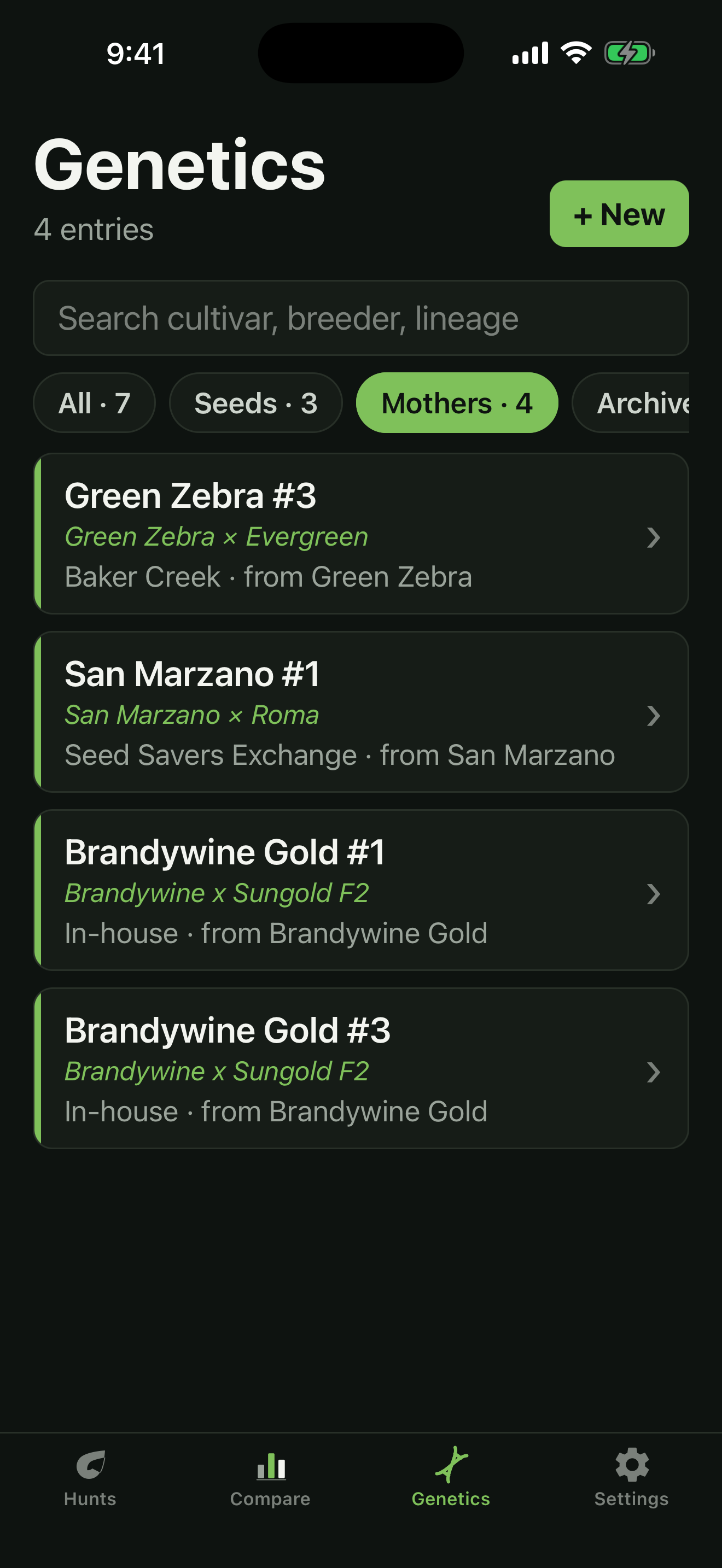
The value of a catalog is that it is complete. Three plants are easy to remember. Thirty cultivars, plus seed stock and an archive of lines you are resting, are not. Put it all in one place and the mix-ups stop before they start.
Give every cultivar a record of truth
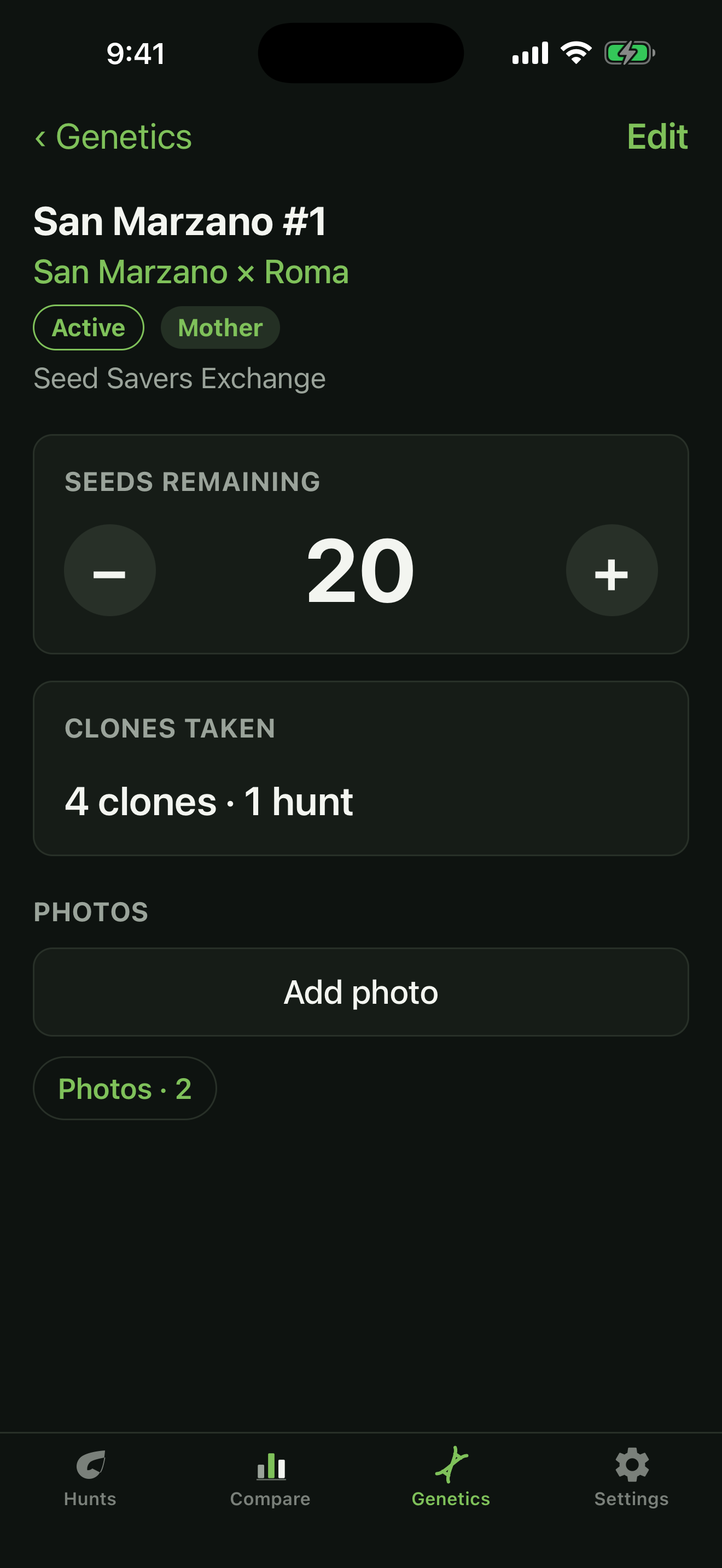
Open a cultivar and you get its full record: the lineage, the source, its photos, and the counts that matter most once a line goes into production. Seeds remaining, which you keep current yourself. Clones taken, with the number of hunts it has run in, which the app rolls up for you. Everything about that genetic line on one card.
When you make a keeper a mother, this card is what you maintain from then on. It follows the line across seasons, so the genetics you selected last year are the same documented line you are cutting from today.
Keep the counts honest
Two numbers live on every card, and they work differently, which is the point.
Seeds remaining is yours to keep current. It is a count you adjust directly, plus or minus, every time you pop or acquire seeds of that cultivar. Knock it down by one each time you start a seed and the drawer never surprises you.
Clones taken keeps itself. You do not tally cuttings by hand. As you start clones from a mother across your hunts, the card rolls them into a running total and shows how many hunts that line has run in. That number is only as good as your habit of actually starting those clones as tracked plants, so the discipline is upstream: log the clone as a plant when you take it, and the genetics card stays accurate on its own.
The split matters. Seed stock drifts because it sits out of sight, so it needs a number you tend. Clone history is a byproduct of work you are already tracking, so the app does the counting.
Document lineage to protect your work
A keeper is intellectual property whether or not you ever sell a seed. The cross that produced it, the source it came from, and the hunt it won are the story that gives the line its value. Record the lineage and source on the card so that story does not disappear the day you forget it.
This matters most when you start sharing or trading cuttings. A cutting with a documented lineage is worth something to another grower. A cutting labeled “purple one, top shelf” is worth a shrug. Documentation is the difference between a genetic line and a mystery plant.
Keep seed inventory on the same system
Living plants are only half of a genetics program. The other half is seed stock, and it drifts even faster because seeds sit in a drawer out of sight. Track seeds remaining on the same cards as everything else so your whole library, growing and stored, lives in one place. A mother usually shows zero seeds remaining, but if you also hold seeds of that cultivar in storage, the count keeps both sides of the inventory straight.
The takeaway
A genetics program runs on records, not memory. Build one catalog of everything you hold, keep a record per cultivar with lineage and source, start each clone as a tracked plant so the clone history rolls up on its own, and keep seeds remaining current. Do that and a label mix-up stops being a way to lose a keeper you spent a whole season finding. The genetics you worked for stay yours, documented and clean, run after run.
Find your keeper.
PhenoLog keeps every pheno, score, and observation in one place and lines them up, so the standout is easy to see. Free to start.
Get it on the App Store